Headaches and other neurological symptoms like fatigue are mainly caused by “Low Brain Energy”.
Our entire organism is intelligent, can sense the present situation, and respond accordingly. The organism always answers a stream of questions: What energy is available? What tasks are required? Can we accomplish these tasks with the available energy? Should expectations be modified to match energy with expectations?
When the brain gets low on energy, it creates symptoms – ESPECIALLY FATIGUE – to slow the organism down and prevent injury, which can happen by overexerting itself beyond its metabolic capabilities. These symptoms can include not only fatigue but headache, muscle pain, tingling, dizziness, brain fog, insomnia, anxiety, depression, blurred vision, and many others.
So, how do we maintain or even raise brain energy? First, we look at things that make the most common sense. We are not being extreme, so these common sense suggestions should be taken into account in the context of our lives. If we are struggling, we need to consider these suggestions and make significant changes. At all times, our organism is intelligent, so we need to perceive what is happening, think about what is happening regarding our actions, and then act on what we think is the best course of action to take. In other words, we are not robots! Use these suggestions in context and intelligently…
The most common-sense areas to examine are sleep, stress, nutrition, exertion, sunlight, supplements, and more complicated factors that will come up later.
(1) Restorative Sleep: We want to allow recovery from stress so that the nervous system is in a high-energy, rested state, which requires adequate and quality sleep.
Simple Ways to Get Better Sleep: Adequate Deep, Slow-Wave Sleep restores your energy. Reduced amounts of Deep Slow-Wave Sleep are seen in hypothyroidism, old age, schizophrenia, and depression.
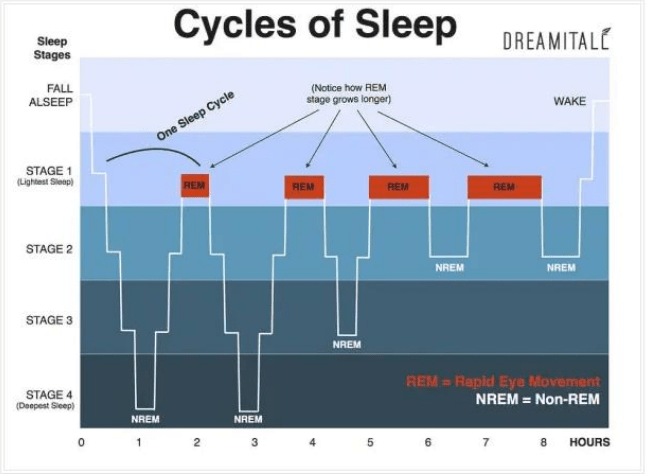
Sleep allows the brain to escape the stress of darkness.
- Stress hormones like CORTISOL increase overnight.
- CORTISOL’s role is to maintain blood Sugar levels so that the brain keeps its energy up. (The
nervous system requires large amounts of the body’s energy supply, even at night.)
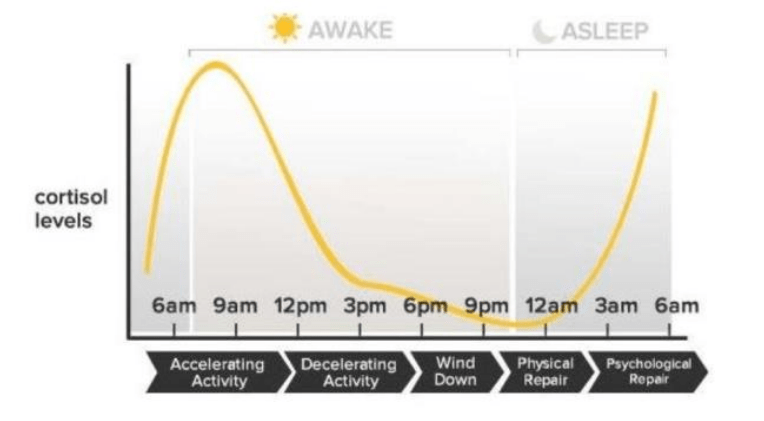
Other stress hormones rise at night:
- Parathyroid Hormone, which maintains Calcium levels in the blood
- Aldosterone, which maintains Sodium levels in the blood
How do we fight the stress of darkness and get deep, restorative sleep?
- A SMALL PRE-SLEEP SNACK: Consider adding a small snack before bed to calm these stress
responses – the snack should include sugar, calcium, and sodium. An old remedy for sleep
solved this through warm milk (calcium), honey (sugar), and a pinch of salt (sodium). This will
allow the brain to relax more and deep slow-wave sleep will be obtained more easily. - INCREASE BODY TEMPERATURE: this will improve deep slow-wave sleep.
a. Hot bath
b. Warming the feet
c. Red lamp therapy
Using your day to set up for deep, restorative sleep: this involves managing stress.
Start the Day Right – REDUCE THE STRESS!
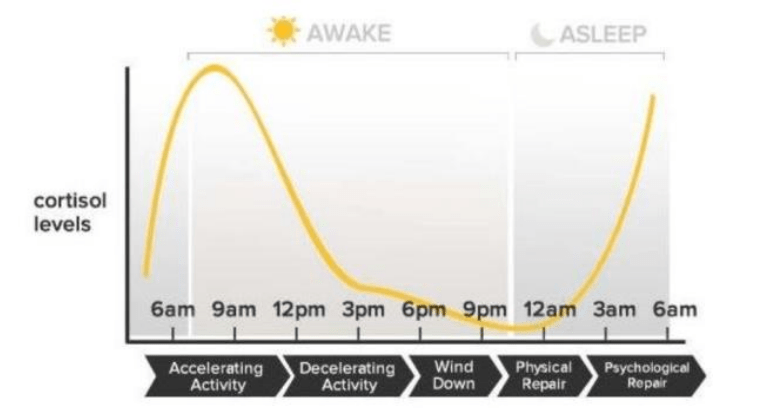
CORTISOL is very high first thing in the morning. Many people say they are not hungry in the morning or feel nauseated. This period of time is very stressful, in fact, strokes and heart attacks occur during this time most commonly which is related to very high CORTISOL levels. We need to begin managing CORTISOL at this time and maintain control throughout the day. Remember CORTISOL is maintaining your blood sugar level. So using foods that contain sugar is a tool that we can use to keep Cortisol’s effect at a minimum.
WHAT TO DO WHEN YOU GET UP?
Immediately on waking, having something with healthy sugar can help lower cortisol, such as drinking a
glass of Orange Juice which has high amounts of sucrose and calcium. This will have the effect of
reducing CORTISOL and other stress hormone effect.
EAT EVERY 1 to 2 HOURS DURING THE DAY
To keep stress hormones under control, especially CORTISOL, frequent snacks may help. Eating a regular breakfast, lunch, and dinner can be continued but avoid extremely large amounts of food at a single sitting – Try to spread the food out over the day. For extreme stress, try to have some food every hour and as you feel better you can move to every 2-3 hours. The best foods are those the body can use quickly such as fruits (e.g., grapes, watermelon, juice) or dairy (e.g., cheese, yogurt, milk). Avoid heavy snacks that are high in starch such as baked goods, pasta, slices of bread, etc.
STORING ENERGY AS GLYCOGEN
As you increase your carbohydrate intake your body will be able to store carbohydrates as GLYCOGEN in
the liver, the muscles, and the brain. During the night, your body can draw on these stores to reduce stress and improved slow wave sleep will result.
(2) Manage Cognitive “Stress” -The brain is not an object of abuse. We cannot simply hammer away at difficult and arduous tasks without creating a backlash of frustration and irritation that are damaging in the long term. Just as you would not physically exert your body for an extended period of time without rest, so too must we consider stress on the brain. Using the so-called left brain (which involves calculation and deductive reasoning, and intellectualization) with out rest or involvement of other brain areas, leads to stress. Some days without left brain activity should be built in. Just as the digestive system benefits from fasting at times, so too the left brain will benefit from a day off.
Also, using the right brain is beneficial if one does not already do this. Artwork, fantasy, daydreaming, relaxation, reading fiction, making love, play, etc. are all examples of right-brain activity. These give the left brain a break and may stimulate ideas for the left brain to use when back online. Computer use is NOT right-brained in general.
For those who have stressful days that cannot be avoided, we need to learn to build in activities that engage the right brain. Having lunch in the park without talk. Talking can be stressful especially at work or when it is reactive – this may concur with coworkers gossiping or talking about social issues that create competitiveness or a sense that you are not doing enough to keep up.
Pleasant-colored lights and aromas are very beneficial to the right brain. Avoid irritants like computer screens, LED lights, smells like perfumes or chemicals, and prolonged periods indoors.
(3) Fuel the Brain AND the Liver – We talked about storing glycogen by eating more digestable sugar during the day and how this will help reduced stress hormones. The brain runs on sugar and so generally will benefit from its increased intake. When the brain has stress it needs more sugar! That is a simple equation. If it does not have enough, the brain can get injured very quickly so it will take the following actions:
- Switch to alternative fuel sources such as lactic acid, and ketones or fatty acids. Lactic acid is a more primitive form of metabolism and will not allow the brain to function optimally. Ketones are better but cause stress as they must be produced by mobilizing fatty acid, When the body is deprived of carbohydrates (glucose), it starts to utilize fat as the primary energy source, leading to ketone production.
- Create symptoms such as fatigue to reduce the chance of overexertion in a state of depivation.
- Generate stress hormones like cortisol to raise blood sugar levels, and if urgent adrenaline to emergently get blood sugar levels up. The increase in these hormones also have the effect of increasing blood flow to the brain, and away from other organs.
In a chronic state, brain stress leads to generally higher levels of blood sugar and the result may be a diagnosis of diabetes mellitis. While this disease is seen as a dietary issue, eating too much sugar, in most cases it is actually due to chronic stress and long-term elevation of stress hormones.
There are 2 well known phenomenon that create the basis of most diseases. The first is called the Randle Cycle which describes a situation in which sugar is needed but due to a lack of sugar, fatty acids must be used instead. With repeated and prolonged use of Ketones or fatty acids instead of sugar, the metabolism begins to prefer fats over sugar and may even begin to not be able to use sugar. This leads to a state of chronically high stress hormones as the tissue call for sugar in spite of the metabolism no longer being able to use sugar. In the brain this is called Diabetes type 3 and is precisely what Alzheimer’s Disease is caused by.
In the next stage of disease is the Warburgh Effect, the metabolism can use sugar only to convert it to Lactic Acid because the machinery of metabolism has been damaged by chronic stress. Now we have what is called Fermentation which is primitive metabolism that is used by cells that want to grow primarily – as seen with fungus. This process lead to tumor formation and cancers.
To protect against symptoms of stress and in the longer term, the development of these disease processes, adequate, healthy carbohydrates will be helpful for us and our brains.
The liver is the principal organ that responds to the stress hormones and mobilize fuel for the brain. First it is able to tap into its supple of glycogen to raise blood sugar levels. Also the stress hormones may encourage muscle breakdown of glycogen to get sugar levels up. Next, there is the process of Ketogenesis which increases ketones in blood as a breakdown of fatty acids. If these are inadequate, the body will breakdown its own tissues to produce higher blood sugar, starting with connective tissue and organs like the Thymus gland. When we see people who are malnourished, often the subcutaneous tissue, the skin, nails, and hair are noticeably impacted by this need to sugar. With an acute illness, often you see the Thymus, which produces antibodies to prevent against infection, dissolve.
The liver is the main organ that regulates metabolism. It does so by activating the thyroid hormone, which encourages oxidative metabolism, which is basically the use of sugar and oxygen to create water, carbon dioxide, and heat. Heat is an important aspect of the living organism as it shows that fuel is being used properly. When the metabolism is primitive, governed by stress hormones and not activated thyroid hormones, then the body temperature falls and the organism is not resistant to cold.
The liver will respond to sugar intake favorably in an otherwise healthy organism by activating thyroid which creates more activity in the organism as the heat rises. In children this is quite easy to see after cake is eaten at a birthday party. The kids become “hyperactive” and the parents get annoyed and blame sugar as the cause, when in actuality it is the healthy organism that is the cause.
The liver’s other role is that of a detoxifier – it clears out toxins from the food and the blood by use of enzymes which are basically proteins. So, it is helpful to have protein in the diet to allow this function to occur. What many don’t realize is that eating only protein is dangerous as it creates the need for sugar to help digest and use the protein. A very energy intensive process must then occur in the liver in which the protein is converted to sugar. An insulin spike is often seen with intake of only an egg, for instance, as the egg is primarily protein and sugar must be made from the protein to be used in the tissues. To mitigate this, we should have 1-2 glasses of orange juice or the carbohydrate equivalent with each egg.
We begin now to get into the area of intestinal health, how industrial foods irritate the intestines, how bacteria in the intestines become overgrown with poor diet, and how the liver is responsible for clean up. These are all areas that impact brain health quite a bit and must be addressed in many folks. We will look at this more below.
Supplements – for people that are really struggling supplements can be helpful. We must note that supplements are not natural – they are made in factories, are encased or held together by some non-natural stuff that may and will likely irritate the intestinal system. So, we can use these with the knowledge that ingesting supplements is not preferable to getting real foods.
Undoubtably, the most effective supplement for the brain in Vitamin B1 which is also called Thiamine. Yes, this is the 1st B vitamin for a reason and is the source of extensive research. Thiamine is absolutely essential for the proper metabolism of sugar! If you are out of thiamine and the body attempts to use sugar, the metabolism will become damaged. So, if a person comes into the emergency room with low blood sugar, everyone there knows to given Thiamine and then sugar to revive the person. To not do this is a Thamine deficient person will cause permanent brain damage in which short term memory is lost, eye movements become abnormal, and the person can no longer walk (Wernicke’s Encephalopathy).
Since Thiamine is stored in limited amount (only about 2 weeks worth), the food must contain thiamine. In the modern world, where fast food and large sodas are dietary staples, thiamine deficiency is a rule and is epidemic. This leads to what one researcher calls, High Calorie Malnutrition. Any type of brain stress will cause rapid use of this Vitamin and brain deficiency can occur within minutes. Since the vitamin in water soluble, it cannot go from the blood to the brain very easily and so it may take days to weeks to recover the brain level of thiamine that are required for normal functioning. THIS is the cause of brain fog that is seen after concussion and after viral infection (so-called Long COVID). (We should note that there has always been a long post-flu phenomenon and COVID is not unique in this way). Other medical stressors that should be expected to cause cognitive slowing include surgery, septic shock, seizure, stroke, and delirium. Take heed also with anxiety, panic attacks, psychosis, fits of anger, and hearing terrible news. These also will use up thiamine. We should mention over exertion as well – marathons, triathlons, etc. Heavy bouts of alcohol use as a rule sap up thiamine.
Magnesium bind ATP (a much needed molecule that stabilize proteins and allow for contraction). After a muscle contracts, the ATP has lost a phosphate ion and becomes ADP which is bound by calcium. In order for the muscle to relax again, ATP must be generated which allows the muscle to relax again. Magnesium is a necessary part of the muscle relaxation to occur. Magnesium is also a cofactor that helps Thiamine function and as such this mineral is often very helpful.
As an aside, the ability to relax is fundamental to health. Getting old is characterized by the inability to relax. So with age we see blood vessel unable to dilate resulting in hypertension, the heart unable to relax and fill with blood resulting in heart failure, the skin get dry and unable to relax from being pinched, the lens of the eye being unable to bend to accommodate leading to the need for glasses, the reflexes in the ankle being slow to recover, the brain being unable to relax leading to worry and insomnia, and the muscle being tight and causing pain. As we see in high school anatomy class, the frogs leg is hard in rigor mortis but when placed in a bath of ATP, the muscle soften and the leg can be moved. Our brain’s ability to oxidize glucose to create heat and carbon dioxide provide spaciousness, the ability to relax and have fun. Carbon dioxide dilates blood vessels and generates a sense of calm and well being. It all comes down to common sense methods to create brain health.
So, getting back to magnesium. This is a good mineral to supplement. Magnesium also has the benefit of relieving constipation which is really helpful for digestive health in many people.
Popular diets – low carb, fasting. Fasting can be helpful to give the intestines a break. Religious reasons for fasting have their own intrinsic benefit beyond what we are discussing in this section. Whenever we fast, we are stressing the organism – that we should know and respect. Low carbohydrate diets are a fad similar to fasting but possibly more stressful. Often protein is eaten without carbohydrates which causes liver stress, as we discussed above. In today’s world, fats have problems in our foods as fats exposed to sun can become rancid if they are unsaturated, and this is not healthy to our metabolism. So, low carbohydrate diets, especially in people who are ill, should be avoided.
(4) Move the Body OUTDOORS – explore! The body is made to move, and the brain is made to explore. This combination of purposes is well suited to outdoor exploration, and none the better than exploring nature. Gardening – the exploration of plants, the soil, the sun and moon, and your locality. Hiking – the exploration of deer paths, wild grown herbs, rock formation, and waterways with your dog and partner. Swimming – the exploration of the aqua depths discovering beautiful sea creatures and wild life, coral, and possibly underwater relics. These are all examples of the use of our brains that will lead to health and energy. Running a marathon has the benefit of movement and the brain can be involved in setting a plan and the rewards of seeing the results of the plan. However the monotony of running can, not for everyone, cause brain stress, Be cognizant – perceive, think, act!
For those that are very ill! Simply walk 5 minutes, lay down 5 minutes flat. This will generate blood flow then laying flat will allow blood flow to goto the brain and not the muscles. Do this 3 times in the moring. If able 2 more times a day. Slowly increase the time walking every few days or so if you are able. Please get out into the sun and sit 3 times a day for 20 minutes also.
Sunlight – sunlight os really vital to who we are. If darkness causes stress hormones to rise, then sunlight causes relaxation, promotes oxidative metabolism, and engergizes our system. If we have more pigment in our skin and are darker, we need more time in the sun! This is very important! Also cholesterol in the skin is converted to vitamin D. High cholesterol is a symptom that healthy hormones are needed (it is not a symptom of too much fat in your diet! Repeat – it is not a symptom of too much fat in your diet!). Improving your brain health will mitigate high cholesterol. As you get older, the skin contain less cholesterol and vitamin D deficiency is more common. One important note is that you can supplement with vitamin D3 oil by rubbing it on your entire abdominal skin. The body will only take what it needs – no worries about overdosing. For those that are ill, please do this 3 times a day if you remember. Also recently I’ve read that Vitamin K2 is really good to take and can also be rubbed on skin. So, I would aim for 50,000 units of vitamin D3 rubbed on skin along with 40 MILIGRAMS of vitamin K2 rubbed on the skin. Somehow get magnesium in as well.
(5) Engage your Muse – this is really really the key to a fulfilling life whether you are an introvert or extrovert, artistic or scientific, athletic or couch potatoes. We all must use our Muse, our inner voice, our guiding light. We are self-guided organisms, not a remote controlled apparatus. We are at the same time part of a whole yet independent and individual. We each have a mission, a purpose, a unique style that should be respected and also appreciated in others. Witnessing other’s on their own path can be quite fulfilling. If we struggle to see this, start slow with baby steps, never condemning yourself for what we perceive as deficiencies, errors, or lack of something. Mediation has been recommended but I think few people really enjoy it. That doesn’t preclude us from sitting in a cafe with our phone left at home watching people and dreaming. A pretty person walks by and we are drawn to a fantasy about being that person’s lover – what house would we have, how gently would we treat each other, or maybe the opposite. Our minds are built to fantasy and imagination.
Which is also to say that our minds and organisms are build to create a picture of the world and how it works, and to generalize. We are often told not to make assumptions, not to generalize, and not to be sloppy with our thoughts. This is of course trying to train out of us our natures. We build maps in our head and with our every days experiences we confirm the accuracy of our maps while at the same time adding to the landscape of it. And from that we make general rules which firm or lossen up over time depending on what happens when we test those rules. Best yet, we can experience something quite interesting in our map and return to that place the next day having broken our some research on it. Perhaps we bring a note book and drawn a sketch of that area, or that beautiful or horrid thing we saw and now know much more about. Maybe we generate a story that exists not so much in the material world, but in the energies that imbue the material world with existence. There are potentially many fantastic things existing in the aura of a thing, or in the implicit world of that things existence. Through that we can create a fantasy which has a magical ending. Perhaps that ending has a physical structure that we wish to call into being. We ask the energies of this world can it be so? I would love to see it and ask that it be so? I will make a little offering here at the spot, maybe a candle with a saying on it… This is intention combing with fantasy and imagination, inspired by our muse. Go for it! And our brains will respond with health.
Are we part of something greater? Yes our family, our neighborhood, our city, our state, our country. But beyond that, what of it? Are we part of that? Once a day or a week, perhaps, we can sit in the dark and allow our Pineal gland to be the only part of us that can perceive any bit of light because it is otherwise too dark for the retinal or skin to notice any. Lets listen to our breath and observe in our mind what images emerge. Perhaps none, perhaps disorganized, perhaps scary. Let’s gently, easily, slowly, go at this for a periods of several months, perhaps taking quick notes after. Does the pineal ever begin to create a coherent picture? An image of who you are? What you are doing? Can you differentiate imagination from real source material coming at you? These are all great questions and the brain will never tire of this pursuit, let me tell you, if you are so inclined.
Lastly, moral questions. Stress undoubtedly arises from immorality. And as you can see, we have a lot to explore here without resorting to immoral behavior. None the less, we get embroiled in it. Alcohol for instance can be fun to try and leads to a lot of laughs. When we wake from a bout of drinking, there is some anxiety… hmmmm what is that? Yes, alcohol is a relaxant and when metabolized up the rebound anxiety can be present. Yet, we call alcohol spirits for a reason. Our connection to that spirit has been blocked temporarily even at the same time the alcohol made us feel we were more connected to the spirit, briefly. That desire to get back to the spirit can bedeavil us, many of us. And, then with alcohol or any addictive behavior we are vulnerable to acting immorally – sexual promiscuity, vandalism, theft, fighting, etc.. Drunk driving can occur. We may end up in prison. Some of use end up using cocaine or LSD. We may become suicidal and kill ourselves. Even reading this paragraph may raise dis-ease in the reader, and living it certainly will. So, as we gain wisdom, we may learn that to become addicted is part of the human experience – we are predated on by mind control experts who have 1000s of years of experience on us. Once we see the this and learn about mind control we can resume our path to brain health.
Mind control comes in many forms however principally it is due to repetition of emotional material related to a specific behavior. The repetition and the emotions are subconscious. We operate in the conscious and it is an active behavior, scanning the environment, looking for opportunities or dangers. That is how it is. Anything confusing in the scanning creates a fear in the organism and the mind retreats to safety which is the subconscious. The subconscious is where we feel comfortable, we are in the group or the herd, and there is safety not standing out. The special skill of the herd and the subconscious is to notice all the details in the environment and to never forget. So, when a sales man comes up close, puts his hand on your shoulder and firmly tells you what you want, that salesman is disengaging our active mind and placing us into the herd. We hear all the details and the showroom is full of positive influences about the products being sold. Likewise, the TV images we are watching move us from an active participant alpha brain wave generator to a passive theta wave sheep that is now part of the herd. The 100s of images of soda we see mean nothing to the alpha person, but to the herded theta there begins to be a reflexive acceptance that a soda would be protective.
I hope these last few paragraphs are helpful. Many benefit from a glimpse of the external world that at the same time is their for our experience, for us to play with and have fun with, and their to challenge us, to create stress and passitivity that will then deeper our immersion into materialism. The material world is fun and exciting but also can be a trap if we are entranced by the additions therein. Largely this is the purpose of writing this… by being aware of brain health, we can pick out these trap doors.
(6) Intestinal Health – the issue of Endotoxin – poisoning from the inside out (Lets Really Take Charge of Our Health).
In taking charge of our health, there is probably no more important topic than Endotoxin, which is involved in most diseases. Endotoxin refers to a part of bacteria called lipopolysaccharide (LPS),
which can infect the gastrointestinal and respiratory tract, enter the bloodstream, and infect other
organs, including the nervous system. The gastrointestinal tract, skin, and respiratory tract are all first-line protectors to the body against invading or damaging substances (toxins). For instance, when you eat rotten food, the defense system’s first goal is to expel it. To do this, the intestines contract and push the toxin to get rid of it through defecation (diarrhea) or vomiting.
The major toxin of the intestines (and the rest of the body) is endotoxin, which builds up in many ways:
- Eating foods that irritate the intestines e.g., old food, food additives, bottled water, excessive alcohol
- Breathing air with endotoxin e.g., house dust, air from purifiers, or filters.
- Bowel Disturbance e.g, constipation or diarrhea
- Excessive physical exertion
- Psychosocial stress
- Exposure to the medical industry
In the intestines, endotoxin triggers inflammation, creating a “leaky gut,” allowing endotoxin to leak into the bloodstream and infect other organs, such as the skin, the kidneys, the heart, and the lungs, causing diseases. Endotoxin can cross the blood-brain barrier and trigger stroke, migraine, or seizures, and in the long-term, cause neurodegeneration, as with Alzheimer’s or Parkinson’s Disease, or neuroinflammation (such as with Multiple Sclerosis). Endotoxin acts at (1) the cellular level in the intestines or in organs it reaches to impair normal metabolism and (2) systemically via an emergency warning mechanism that involves the release of Serotonin, increasing stress hormones.
Steps in Diagnosis and Treatment:
Recognizing the Clinical Situation
Common complaints: fever, flu-like symptoms, nausea, vomiting, diarrhea, constipation, bloating, abdominal pain, heartburn, fatigue, irritability, depression, anxiety, rash, vertigo, dental pain, asthma, insomnia, headaches/migraines, tinnitus, dizziness/vertigo, muscle pain & or weakness, tingling, burning, vision changes, seizures, stroke, neuropathy, tremor, parkinsonism, memory problems/brain fog, hearing loss, Sudden effects: flu-like illness, septic shock, seizures, blood clotting resulting in stroke, heart attack, pulmonary embolism, stroke.
Stable phase manifestations: often asymptomatic with suppression of pain and discomfort via the opiate system and due to endotoxin tolerance.
- Gastrointestinal (e.g., Irritable Bowel Syndrome, Inflammatory Bowel Disease; Leaky Gut Syndrome, Fatty Liver Disease, Appendicitis, Cholecystitis, Peptic Ulcer Disease, GERD). Allergies (food or environmental).
- Skin (e.g., rashes, dermatitis). Pulmonary (e.g., asthma). Metabolic (e.g., High Cholesterol, Hypertension
- Diabetes Mellitus, obesity, systemic inflammation). Periodontal (dental cavities), Psychiatric (e.g., bipolar, schizophrenia), Hormonal (e.g., Thyroid disease, Endometriosis, Polycystic Ovarian Syndrome, Pituitary Disorders). Neurological (chronic white matter hyperintensity of MRI of the brain, Migraines).
End Stage conditions:
- Autoimmunity (e.g., Lupus, Rheumatoid Arthritis, Multiple Sclerosis, Myasthenia Gravis). Cancer.
- Neurodegeneration (e.g., Alzheimer’s Disease, Parkinson’s Disease, ALS). Epilepsy. Heart Disease (e.g.,
- CHF, Valve Disease, Atrial Fibrillation). Lung Disease (e.g., COPD). Liver Disease (e.g., cirrhosis). Kidney
- Disease (e.g., renal failure, hemodialysis endotoxin, nephritis). Bone Disease (e.g., Osteoporosis, Arthritis,
- Anemia). Neuromuscular (e.g. neuropathy, myopathy). Accelerated Aging (fat loss, sarcopenia
Treatment of intestinal endotoxin:
o Endotoxin Removal – Clean intestines
▪ Targeted Endotoxin Treatment
o Restore Intestinal Permeability: some considerations for healing a leaky gut: supplement with Short Chain Fatty
Acids (SCFA), L-glutamine, Vitamin D, Bone Broth, Marshmallow Extract.
o Endotoxin Prevention:
▪ Reduce bacteria population:
- Generally, keep microbiome in check by eating easily digestible food to lessen the amount that
bacteria can use. - Ingesting insoluble fiber daily, i.e., raw carrot, bamboo shoots, carrot salad)
- Low starch and gluten free diet (avoid breads, pasta, pastries, fermentable
carbohydrates/additives including gums, nanoparticles) - Simple sugars (favor fruit and dairy)
- Well cooked vegetables (never have raw vegetables)
▪ Avoid Constipation (see Constipation Treatment Instructions).
▪ Avoiding intestinal stress - Avoid mechanical stress: twisting, tossing, jerking, vibrating of the intestines.
- Avoid psychological stress (acute or chronic)
- Avoid metabolic stress: do not fast, avoid carbs and protein deficiency.
▪ Maintain a healthy metabolism: - Avoid metabolic disruptors: thyroid disrupters, estrogen, polyunsaturated fats
o Manage Estrogen – information about menstrual cycle and estrogen versus
progesterone.
o Avoid polyunsaturated fats (e.g. vegetable and fish oil – what are PUFAs? - Maintain adequate energy with diet
(7) Being Female – because of estrogen production you are at higher risk of problems like autoimmunity, migraine, Hashimoto’s Thyroidiits, cancer, Multiple Sclerosis. Many women diet (low carb and protein) and excessively exercise – this is not healthy for the female organism. Why is my neurology clinic full of women? Also, something on menopause – yes men you are included here because damaged tissues create estrogen. Oh, and yes men you too have a monthly cycle.
Case – Menstrual Migraines
40-year-old female with recurrent migraines that occur in the days preceding her menses for last
13 years. Usually onset is gradual, starting with pressure behind eyes and progressing over
hours to left temporal 8/10 pounding pain, with associated nausea and sensitivity to light and
sound. Abortive treatment has been ineffective as she failed triptans, and other analgesics.
Migraines may last days so she tries to sleep them off and may miss work. She notes that her
menstrual cycle is regular at 28-30 days with ovulation at midpoint. PMS symptoms includes
somatic tenderness, irritable mood, and sometimes food craving. Also notes sleep onset delay due
to rumination, and frequent wakes-up overnight. Often has low energy during the day. Her
appetite is good, but diet is variable and not consistent. Often, she misses breakfast as she is not
hungry and may not eat until noon. Primary source of protein has been some meat and green
vegetables. She doesn’t consume dairy or eggs but has no problems with these foods. She is on
no meds, has no other medical issues, drinks alcohol occasionally, and does not smoke or use
marijuana. Exam (normal BMI and Vital Signs with forehead temp 97.4F and pulse 55),
Neuroimaging, Basic Labs are unremarkable.
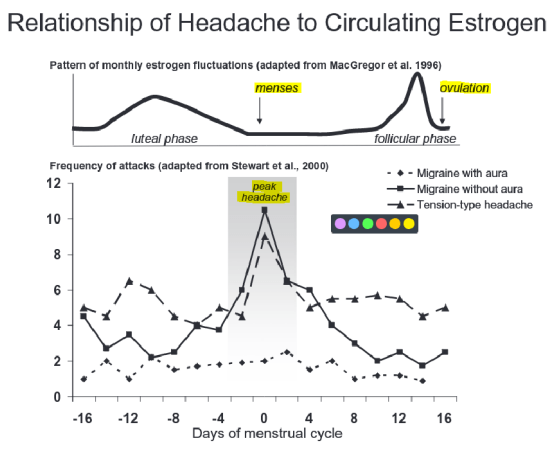
Overview:
Migraines headaches occur in about 20% of women and 5% of men. Although causes of
headaches are likely due to many factors, estrogen appears to be a significant influence due to
the gender difference. In a susceptible individual, headaches seem to be triggered by such events
as stress, ingestion of particular foods, lack of sleep, experience of somatic pain, and others.
Once the diagnosis of primary headache disorder is made, it is common to direct treatment
towards prevention and abortive treatment. Prevention often involves modifying triggers. For
instance, in a person with insomnia, it may be useful to provide education regarding sleep
hygiene improvement (e.g., regular sleep-wake times, removal of stimulation like TV and
computers, avoidance of blue light, and addition of red light, meditation, Epson salt bath, adding
soft, soothing background noise) and to offer options for sleep aids (e.g., teas, herbs,
supplements). Neck pain and other common somatic complaints with migraineurs (such as TMJ
Syndrome, Bruxism, back or shoulder pain) is another common trigger that, when addressed, may
significantly reduce the frequency of headaches. Prevention may sometimes be employed in the
empiric use of supplements without testing, including Riboflavin (vitamin B2), Vitamin B12,
Magnesium, Butterbur, and others. Additionally, trial and error in elimination dieting often may
help. Prescribed medications (including the 1st line therapies of tricyclic antidepressants,
topiramate, and propranolol) are a consideration when the frequency and intensity of headaches
impact the ability to function in daily life.
One common scenario in cases of daily headaches is the overuse of abortive analgesics, which
triggers the condition of Rebound Headache. To avoid Rebound, generally Abortive
Treatment should be limited to 2-3 days a week. Primarily, this restriction is expressly meant for
pain relievers such as Ibuprofen, Tylenol, and other prescribed medications and may not be true
for alternative therapies. Overall, the goal is to minimize headaches by prevention and to avoid
abortive treatment.
One focus for nutrition-minded clinicians is to address metabolism. There is substantial evidence
that migraines are related to metabolic disruption. This does not imply that infection, vascular
abnormalities, and other pain mechanisms are not to be considered. Still, once considered and
deemed less likely, it is helpful to examine how efficiently food is being used in the migraineur.
Metabolism is extremely complex, and finding a single cause of disruption is not usually
possible. A general focus on how liver and brain cells oxidize glucose is a good starting place,
followed by assessing basic factors that influence oxidation:
- Beneficial Factors: thyroid and its hormones, progesterone, magnesium, B-vitamins and
fat-soluble vitamins. - Impairing Factors: estrogen, endotoxin (lipopolysaccharides), Serotonin, cortisol (chronic), parathyroid hormone, aldosterone.
Central to this process of creating a healthy environment for glucose oxidation is the liver. And
this is of utmost importance in educating patients experiencing headaches that would like a
“natural” solution.

During the menstrual cycle, there are dramatic changes in the hormones in the uterus. Estrogen’s
main purpose is to start new growth and in doing so must completely change the metabolic
environment of the tissues in which it acts. Its actions are varied but clearly Estrogen promotes
the uptake of water by cells (which provides the space and nutrition for cell division to take
place) AND through vasopressin prevents water loss in the kidneys, while losing salt. Water, we
are realizing since the discovery of the MRI, when inside cells is Metabolic Water, a novel state,
which influences the state of proteins and molecules within it allowing for such functions as
memory. Thus, in a highly estrogenic state many people complain of brain fog or memory
disturbance – Estrogen is the biochemical eraser of memory, be it molecular or personal
memories.
And so, the body needs to quickly dampen the impact of Estrogen, and it does so with
Progesterone. Often in displays of the amount of Estrogen and Progesterone during menstrual cycle,
one gets the impression that there are relatively equal amounts of each. However, looking at the
units, Progesterone is vastly more concentrated in the body that Estrogen with amounts 1000 times that of Estrogen. The body respects the power of Estrogen to build as well as to destroy, so
it has plenty of Progesterone around to dampen this effect.
Analysis should then focus on what is creating the ability of Estrogen’s effect to escape the
protection of Progesterone. The answer may be The Third Ovary as it has been described in older
times, otherwise known as the Thyroid Gland. The thyroid and its hormones are as critical for
pregnancy to occur as it is for estrogen to be controlled. The following are functions related tothe
thyroid in this regard:
Thyroid hormones (with Vitamin A) are critical for converting Cholesterol into Progesterone. For pregnancy to occur and to avoid miscarriage, it is vital the Progestational Hormone be present with minimal ESTRUS or Estrogen HORMONE. This cannot happen without thyroid hormone. Additionally, Progesterone inactivates Estrogen production and mobilizes Estrogen from within tissues to be removed by the liver.
- Thyroid hormone is essential for proper bowel motility and creating of Bile Salts.
Estrogen is removed from liver via bile salts, which if insufficient slows down removal of
Estrogen from blood stream. Additionally, with low thyroid, intestinal motility slows and
allows Estrogen back into the entero-hepatic circulation, keeping blood Estrogen levels
high. Bowel slowing also allows for bacterial overgrowth, which can trigger endotoxin
production. The intestines respond by discharge of Serotonin to cause intestinal
contraction to urgently remove its contents, some of which escapes into circulation with
Estrogen. Estrogen and endotoxin are known to interact and amplify their effects. - Thyroid hormone requires the liver to convert the majority of inactive thyroid (T4) into
active thyroid (T3). The liver has limits in its ability to handle the stress of toxin removal
(Estrogen, endotoxin) as well as converting T4 to T3. In the setting where there is too
much to detoxify, the proteins can bind and hold toxin in the blood as storage until the
liver is capable of clearing. If toxin load is too high in conjunction with inadequate
protein, B vitamins, and carbohydrates, the liver may sense that a higher metabolic rate may
not be handled in a healthy way and may choose to quickly deactivate T4 or T3 to
reverse T3 as a storage form of thyroid. - As Estrogen and endotoxin spill into the blood from the overwhelmed liver, Estrogen
inactivates the thyroid at multiple levels, further allowing Estrogen to dominate the
organism as Progesterone will be more difficult to make. A diet high in
Polyunsaturated Fats will add to thyroid inactivation.
In a state of Estrogen Dominance (over Thyroid and Progesterone), the individual is highly
sensitized to any noxious stimulation that can create headaches or other symptoms. The Estrogen
energetic state is characterized by gradients of more water in cells and less in the blood causing
the kidney to conserve as much water at the expense of sodium as it can. The urine then becomes
less dilute (specific gravity decreases). Muscles will take up more water and cramping and
fatigue more easily, and over time may create fibromyalgia. Blood vessels and smooth muscles
take up water as well and resulting in high blood pressure, leakiness of blood out of vessels into
extracellular space causing orthostatic hypotension, and breakdown of fibrin in the blood vessel
walls leading to inflammation (increased CRP) and blood clotting (e.g., DVT). Connective tissue
cells and nerves retain water leading to Carpal Tunnel type Syndromes, inter-vertebral disc
edema, and in the brain fatigue, sleep disruptions, emotional changes and even seizure.
Looking at Estrogen – Thyroid – Progesterone and the other factors mentioned, a clinician can
begin to see the larger picture that incorporates many common conditions. In examining a
patient, looking for signs of edema, nerve entrapment, delayed relaxation of reflexes and other
common clinical manifestation may help with assessment.
Work-Up
Further information and tracking:
- Track yourself on cronomoter.com app 1-2 times a week:
- Food intake
- Body temperature: on waking, after lunch, before bed – look for increasing waking
temperatures with better metabolism (dealing with stress hormones at night), steady
increase after meals and slight drop before bed. - Pulse rate should increase with metabolism; however, this should be gradual, and
significant increases suddenly may be stress related. - Volume of fluid taken in and urinated. As Estrogen creates high body water volumes,
track amount of free water taken in and reduce steadily attempting to reset thirst set
point.
- Also track:
- Fatigue levels & Response to exertion – efforts to avoid severe fatigue should be
noted and minimized.- Avoid fatigue in 7-10 range, gradually increase your ability to tolerate healthy
activities - With less FATIGUE at Rest and With Exertion to the body will begin to increase
its metabolism
- Avoid fatigue in 7-10 range, gradually increase your ability to tolerate healthy
- Sleep efficiency. Provide sleep hygiene education:
- Build a consistent sleep pattern with a regular, fixed wake-up time, even on
days off! - Avoid computers, tv screens, phones (Blue Light) after sun goes down
- Exposure skin to Red Light for 20 minutes before bed
- Expose yourself to outside light (e.g., open curtains or blinds) upon waking to
encourage wakefulness. - Epson salt bath can create a calming feeling and can relax sore muscles
- Key to deep sleep is adequate carbohydrates and protein (eaten during the day,
and small amount before bed) - Avoiding naps during the day, maintaining a wakeful state during the day will
enhance deep sleep
- Build a consistent sleep pattern with a regular, fixed wake-up time, even on
- Monitor digestion – constipation, hard or soft stools, bloating, heart burn
- Stress Level:
- Anticipate stress, prepare for it by getting rest and eating well. A small amount
of sugar and protein (like cheese and fruit) can help you deal with a stress - As you get older, life becomes more stressful and it becomes harder to relax and
sleep becomes fragmented. Maintain enough calories to counter the stressExercising TOO much can create significant stress. Avoid hyperventilation and
perform short-set muscle building exercise instead of endurance exercise. - Seek help from a professional for extreme stress
- Anticipate stress, prepare for it by getting rest and eating well. A small amount
- Fatigue levels & Response to exertion – efforts to avoid severe fatigue should be
As you start eating, getting sleep, and avoiding stress, your energy level and
metabolism will begin to increase.
Aside from testing already completed (CBC, CMP, TSH), diagnostic testing that may be helpful
include:
- A close look at energy production (mitochondria, oxygen delivery/methylation, thyroid):
- Urine test for organic acids –
o Adipate, suberate, ethylmalonate (if high, consider supplement with L-carnitine,
riboflavin)
o High Lactate to Pyruvate (use this as a marker for dietary success)
o HMG (if high, supplement with serum CoQ10)
o BCKA (expect low levels as estrogen uses up BCAAs quickly (*) and
supplement)
o Xanthurenate (if high, supplement with vitamin B6)
o B-HIV (if high supplement with Biotin)
o MMA, FIGLU (if high, consider B12, FA supplements)
- Urine test for organic acids –
- Thyroid assessment: total T3, reverse T3, T4, iodine, zinc, selenium levels (supplement
minerals if low, use thyroid as marker of diet success) - Vitamin D panel, with ionized calcium, RBC Magnesium
- Hydration: Urine and RBC Potassium, Urinalysis (specific gravity will be low with
overhydration), Urine Sodium (increased with overhydration) - If anemia with low MCV, Iron panel (ferritin, total iron, TIBC, % saturation) – important
for menstrual migraine patient
- Assessment of factors for oxidative stress –
- HPLA, 8OHdG, lipid peroxide levels, vitamin C and E levels
- Systemic inflammation: CRP, ESR, D-dimer (fibrin), Hcy
Assessment of Liver/ Intestinal function - Lipid panel (elevated HLD indicates high endotoxin load)
- Assessment of liver function, including AST, ALT, bilirubin (direct and indirect)
- If suspected SIBO (bowel issues), check Benzoate/Hippurate, Indican, D-lactate,
Tricarballylate, D-Aribintitol - Neurotransmitters (if high 5-HIA, limit tryptophan in diet, avoid excessive meats/grains,
add glycine by gelatin; feverfew is a serotonin antagonist**)
- If suspected SIBO (bowel issues), check Benzoate/Hippurate, Indican, D-lactate,
- Obayashi, Mariko, Yoshiharu Shimomura, Naoya Nakai, Nam Ho Jeoung, Masaru Nagasaki,
Taro Murakami, Yuzo Sato, and Robert A. Harris. “Estrogen Controls Branched-Chain Amino
Acid Catabolism in Female Rats.” The Journal of Nutrition 134, no. 10 (October 1, 2004): 2628– - ** Nutrition in the Prevention and Treatment of Disease. Elsevier, 2001.
Treatment- From big to little picture
- General Diet:
o Optimal Diet = “choose wisely among available food options”
o Aim for a Defensive Diet, find foods that work for you, increase slowly volume
o Depend on body size/activity level, goal is 2000-3000 calories a day (slow and
smart)
- Maintain adequate protein and carbohydrates for liver function:
- Protein 0.9 g/kg
- Guide: Protein: 70g+: dairy (milk, yogurt, cheese), cooked green leafy
vegetables, beef gelatin, small amount of muscle meat/chicken, non-fatty fish
(cod, sole), shellfish (oysters, shrimp); have a serving of liver once a week.
- Guide: Protein: 70g+: dairy (milk, yogurt, cheese), cooked green leafy
- Carbohydrates – try to keep at 2 times protein level to avoid protein misuse as fuel
- Guide: Carbohydrates 150g+: fruit, orange juice, honey, rice, potato, dairy
(milk, yogurt, cheese), Haagen-Dazs Ice Cream
- Guide: Carbohydrates 150g+: fruit, orange juice, honey, rice, potato, dairy
- Protein 0.9 g/kg
- Avoid intestinal irritants:
o Consider reducing foods on Allergy testing
o Avoid uncooked vegetables or salads (one exception is a raw carrot which is
recommended daily)
o AVOID food additives including strict avoidance of Carrageenan, Gums, Soy, Canola, etc.
No processed food
o AVOID eating out as much as possible; supplement with vitamin E after eating if you do
o AVOID pasta, baked goods, bread, cereal, nuts or seeds. Sour Dough bread and popcorn
ok in small amounts.
- Avoid thyroid inhibitors: No vegetable oils, seed oils, unsaturated fats, cruciferous
vegetables.
- Reduce water intake empirically, if able attempt only small glass of free water with
meals and then only if thirsty
o Diuretics appears to help migraines (acetazolamide, Topamax©), so increasing
amount of cocoa* (dark chocolate) may be helpful
- Sentürk, Murat, Ilhami Gülçin, Sükrü Beydemir, O. İrfan Küfrevioğlu, and Claudiu T.
Supuran. “In Vitro Inhibition of Human Carbonic Anhydrase I and II Isozymes with
Natural Phenolic Compounds.” Chemical Biology & Drug Design 77, no. 6 (June 2011):
494–99. https://doi.org/10.1111/j.1747-0285.2011.01104.x.
At some point, if fatigue and sleep issues remain and depending on labs, intake of 1/4
tablespoon of white sugar every 1-2 hours, and 1/4 tablespoon of salt in free water.
Sleep Recommendations:
- Before sleep, drink small glass of milk (warm) with 1-2 tablespoons of local honey, and
1/4 tablespoon of salt – this will counter cortisol, aldosterone, and PTH rise overnight. - On waking, due to extreme stress state, due to elevated cortisol by 8am, have fluids with sugar immediately (best is OJ due to Calcium content as well).
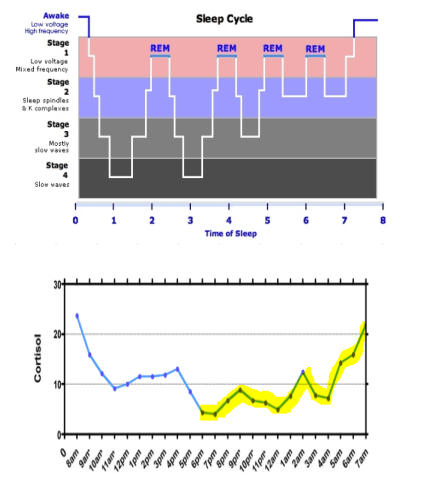
Exertion
- For those having trouble with exertion, consider resetting fatigue set point by building up
resting metabolic rate
o Walk 5 minutes then rest 15 minutes x 3 and repeat this in morning and evening
o This should raise the resting metabolic rate over time, slowly.
- Overall avoid excessive hyperventilation type exercise. Muscle building by lifting
weights a few times a week for 20 minutes is probably ideal.
Supplements:
- To combat fatigue:
- Thiamine 300 mg in the morning
- Magnesium citrate or glycinate: 250 mg 3 times a day
- Riboflavin: 200-400 mg daily
- CoQ10: 1-3 mg/kg/d
- For 5 days before and after menses
- Vitamin E – 400 IU daily (see toxinless.com for best brand)
- Butterbur – standardized extract of petasites (Petadolex®) 50 mg BID
during menses
- For refractory headaches will consider adding next visit:
- Feverfew
- Alpha-lipoic acid: 600 mg/d
- Folate
- Vitamin B6
- B12
Follow-up
- q4 weeks to assess headache frequency/intensity
- Expect steady increase in waking temps, improved fatigue/sleep
- Monitor waist circumference
- Stay alert for central weight gait
On this diet plan there will be shift in set points for thirst, body fuel needs, and muscles/liver will
become denser (weight will increase)
- Assess metabolic / oxidative stress labs, and supplement as needed
- Educate, if needed, on Sympathetic – Parasympathetic inertia and path forward-thyroid
- If failure to increase metabolism, improve headaches, consider
- Liver testing
Phase 1 conjugation tests – caffeine challenge
Caffeine clearance may be high if liver is dealing with toxins and phase 2 may fall behind
(supplement with glycine, vitamin C and E, Zinc, Selenium, A-lipoic acid)
Caffeine clearance low if chronic estrogen exposure present (*)
Phase 2 testing – benzoic acid challenge may urinary pyroglutamine if glycine low - Further Intestinal testing
Permeability screen
Food antibody testing (IgE/IgG)
- Liver testing
- Abernethy, D. R., and E. L. Todd. “Impairment of Caffeine Clearance by Chronic Use of LowDose Oestrogen-Containing Oral Contraceptives.” European Journal of Clinical Pharmacology
28, no. 4 (July 1, 1985): 425–28. https://doi.org/10.1007/BF00544361. - Assessment of hormonal levels and related electrolytes/minerals (for markers of stress,
potential areas that may be limiting metabolism):
AM Parathyroid hormone, Vitamin K, Osteocalcin
AM Aldosterone, RBC potassium, AM Cortisol to measure overnight stress (along with PTH and
aldosterone and TSH)
Prolactin (marker for Estrogen levels) - Consider rechecking hydration status labs, lactate/pyruvate ratio
Prognosis - Emphasize that overall metabolic support important to overall health and that with proper
nutrition, many factors may improve.
Sources:
Texts:
Ingrid Kohlstadt (CRC Press). Advancing Medicine with Food and Nutrients, Second Edition
ISBN: 978-1-4398-8772-1
Richard Lord. Pathways to Health Series & Laboratory Evaluations for Integrative and
Functional Medicine.
Ray Peat. Nutrition for Women.5th Ed. Kenogen, P.O. Box 5764, Eugene, OR 97405
Articles:
Yorns, William R., and H. Huntley Hardison. “Mitochondrial Dysfunction in Migraine.” Seminars in Pediatric
Neurology 20, no. 3 (September 2013): 188–93. https://doi.org/10.1016/j.spen.2013.09.002.
Avnon, Y. “Autonomic Asymmetry in Migraine: Augmented Parasympathetic Activation in Left Unilateral
Migraineurs.” Brain 127, no. 9 (August 2, 2004): 2099–2108. https://doi.org/10.1093/brain/awh236.
(8) Seasonal Health – according to the sky clock – it is hot and dry in summer (so don’t eat foods that are hot and dry), it is cold and wet in the winter (warm up your stove, your liver and gallbladder). What of the tastes of foods – some interesting stuff here to consider.
(9) Electromagnetism
(10) What does the need for a diagnosis due to some of us?
(11) Performance enhancement versus Restorative Relaxation – aging is the inability to relax, the nervous system is most affected by push to perform without proper relaxation,
